There is a particular clarity to the Wiltshire landscape in mid-October. The air this morning carried that crisp, clean bite that signals the true turning of the season. I was walking a sloping pasture just adjacent to the historic Norman chapel here in West Grimstead, and the ground beneath my boots felt firm, the grass slick with a heavy autumn dew. It is a quiet time of year; the frantic energy of the harvest has passed, the fields are shorn and resting, and the rooks are wheeling in great, lazy circles against a pale blue sky. Up here, away from the busy hum of Grimstead Road, you are enveloped by a profound stillness. It is just you, the steady rhythm of your breath, and the gentle, reassuring chirp of the detector.
There is a wonderful patience required on days like this. You aren’t rushing; you are sweeping the coil in slow, deliberate arcs, almost like scything hay. It’s a meditative process that forces you to slow your mind to match the pace of the landscape. I had been out for nearly two hours, enjoying the solitude more than anything, when I received a beautifully crisp, repeatable signal on a gentle slope just a stone’s throw downhill from the ancient chapel walls.
Kneeling down in the damp earth, I peeled back a neat sod of turf. The entire field had been full of modern scrap, so I was given to a moment of anticipation when this solid signal came to me, then the soil parted. And from there–not so deep as to be a chore–came that glinting, familiar, soft dull-green patina of aged copper alloy. I now held a curious, conical object!
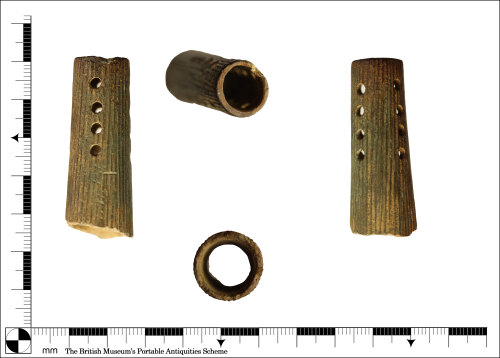
Upon initial inspection, it looked for all the world like a standard post-medieval keg key or plug—the sort of utilitarian object used to tap beer or cider barrels in local taverns across the county. I’ve encountered pieces of rural hospitality before, but as I brushed away the clinging Wiltshire soil, this thirty-sixth find of our collection began to tell a story uniquely tied to the very spot where it fell.
The Find & Its Story
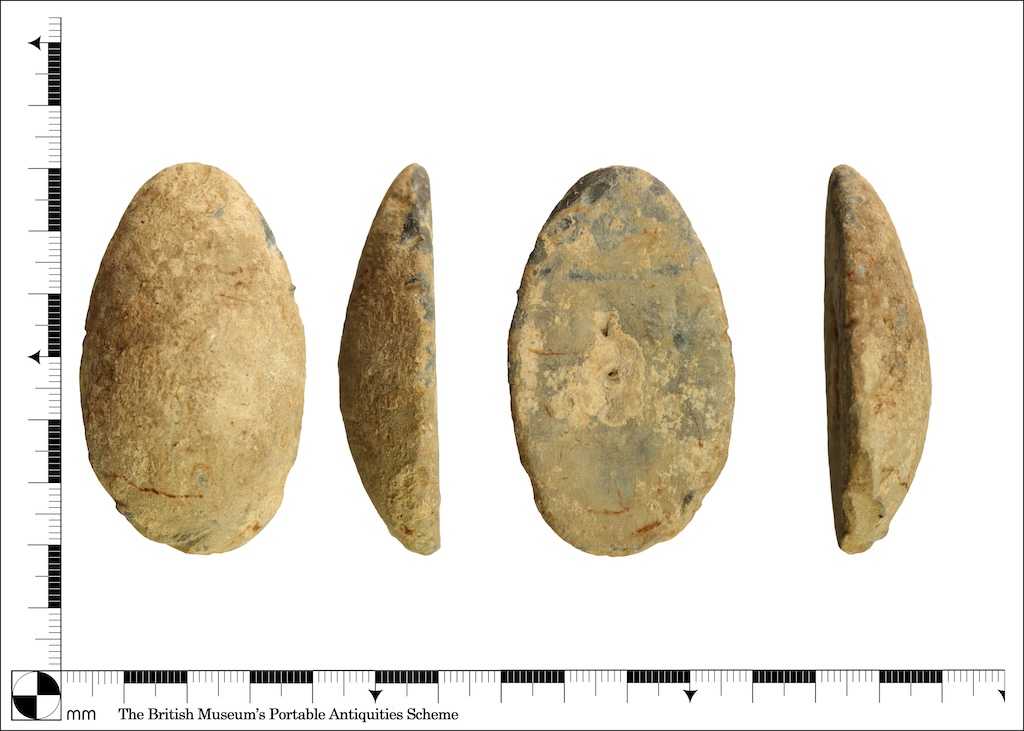
Unique ID: WILT-04CAF4
Object Type: Keg plug / tap fragment
Broad Period: Post-Medieval to Modern (c. AD 1800–1900)
Material: Cast copper alloy
Weight: 19.0g
Dimensions: 44.8mm in length; 17.1mm diameter at its thickest point.
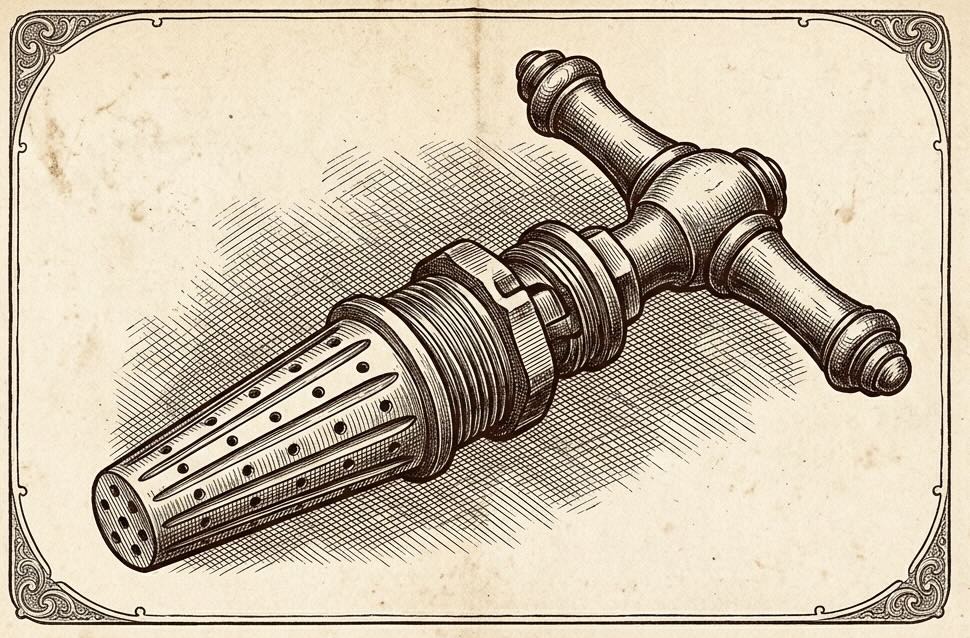
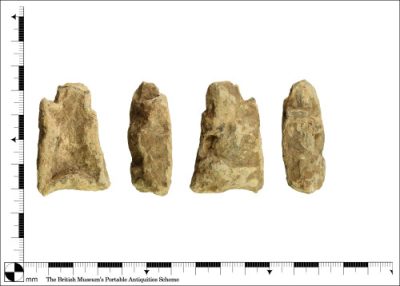
At its core, the object is a hollow, cast copper-alloy conical plug. The wider end is broken, indicating it was snapped away from a larger mechanism—specifically, the main body of a heavy brass or copper barrel tap. The exterior is decorated with rather elegant, shallow incised fluted lines.
This is the business end of a working barrel tap. When a heavy wooden keg of cider or ale was brought out for a grand community occasion, the tap had to be driven home into the barrel’s bung with a heavy wooden mallet. Those 16 drilled holes weren’t meant for a garden hose; they were the internal sieve of the tap itself, designed to sit inside the liquid and strain out the yeast, sediment, and likely wood chips as the beverage was poured, ensuring a clean pint for the thirsty villager.
Given that it was discovered just outside the Norman churchyard boundary in West Grimstead, on a perfectly sheltered, slightly downhill slope, a wonderfully clear picture emerges. This wasn’t lost during solitary farm work. This tap likely met its end during a Victorian or Edwardian village fete, a church bazaar, or a beating-the-bounds celebration.
We often tend to view history through the lens of grand, solemn events, particularly when searching near religious architecture that has stood since the Normans. But churches and chapels were not just places of Sunday worship; they were the absolute beating heart of rural social life for centuries.
Imagine the scene a hundred or more years ago: the tables set out on the grass just below the chapel, the children playing, the linen banners catching the breeze, and a great wooden keg perched on a trestle. Someone—perhaps a bit too enthusiastic to get the festivities started—swung the mallet to drive the tap into the keg. A misplaced blow, a sudden fracture in the metal, and snap. The tap sheared off, rendering it useless, and was cast aside into the grass as a replacement was sought.
It is also possible that some time after, the landowner had burned a keg or two in this field after they served their purpose, and the broken shaft of the tap is all that remains of the original.
Reflections from the Field
Sadly, I will never know for sure. The landowner has since sold the lot, and access to this particular pasture has drawn to a close. While it brings a pang of melancholy to say goodbye to a generous piece of land, I am deeply grateful for the stories it saw fit to share with me while I was there.
The find itself was fully recorded, as were the military buttons and company-issued coins we uncovered previously. Though it is no longer open to exploration, this irregularly shaped field remains a beautiful reminder that our ancestors left their history not just in their monuments, but in their moments of everyday celebration. I was privileged to explore there, and while the field is now silent, every find tells a story!







You must be logged in to post a comment.