While many thimbles are delicate, decorative things made of brass or silver, some tasks in the post-medieval world required something far more substantial. I discovered this piece in a field not far from Clarendon Palace, in an area I imagine served as a camp for the followers and servants of the royal hunt. It sits at a “respectable distance”—about a mile or so from the palace grounds—but remains close to where the Royal Kennels once stood. I find a great deal of lead in this particular field, though it is mostly small, nondescript scrap. This target was different; the detector’s signal was unmistakable, and I immediately recognized the reading as a substantial lead object, though I have rarely found a piece of this scale and weight in such good condition.
The museum calls this a “palm guard,” but they still list it in the thimble category. While we usually think of a thimble as a tiny cap for a fingertip, experts use the word for any tool that helps push a needle. A regular thimble is fine for thin cloth, but it wouldn’t stand a chance against thick leather. This lead guard allowed a worker to use their whole arm and the flat of their palm to force a heavy needle through tough hides that would otherwise be impossible to pierce.
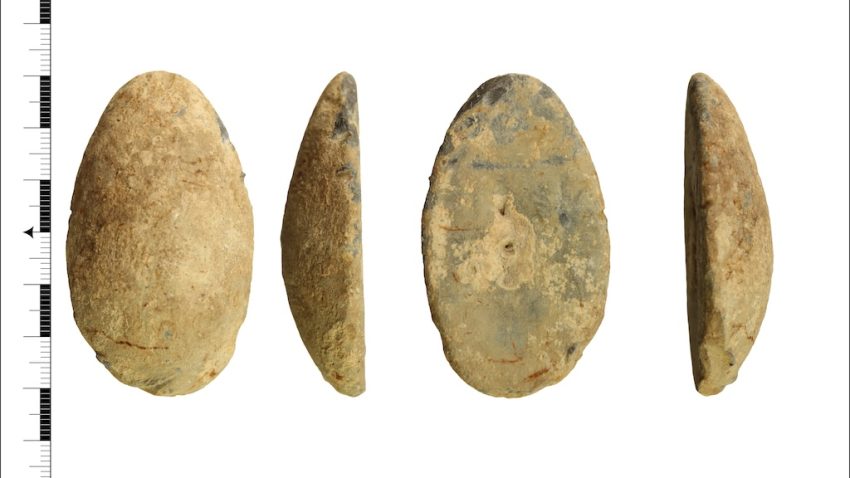
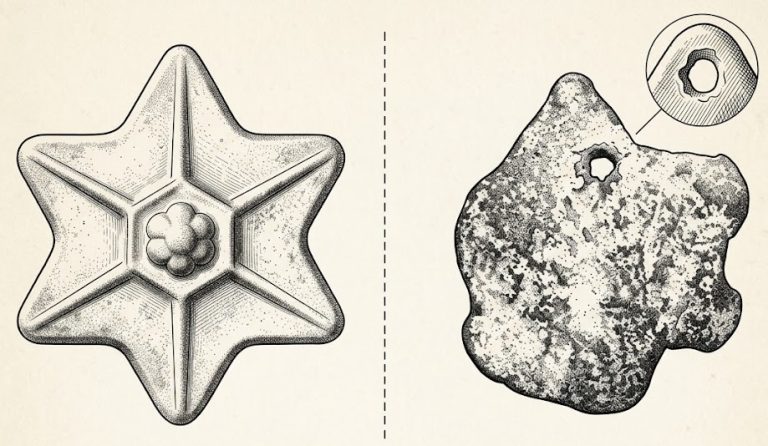
The object (WILT-DB77BB) is teardrop-shaped and semi-circular in section, with a flat underside meant to sit against the palm. It has developed a rough, whitish patina over its darker grey lead body, typical of lead that has spent centuries in the soil. On its underside, the tool bears the marks of its utility: two deeply incised pits along with a rising sun or star-shaped impression. These pits served to catch the head of the heavy needle, preventing it from slipping under extreme pressure and injuring the worker.
Dating these utilitarian tools is difficult as their design remained unchanged for centuries, but experts place this example between AD 1500 and 1900. Measuring 62.4mm and weighing 181.5g, it represents the “invisible” labour of the past—the harness makers and cobblers who kept rural industry moving. Holding this guard reveals the literal weight of that history; it is a reminder that before machines, every stitch in a heavy leather strap or boot required human strength and a piece of lead to overcome the resistance. Its proximity to the Royal Kennels suggests a busy environment where repairing hunting gear was a daily necessity.







You must be logged in to post a comment.