
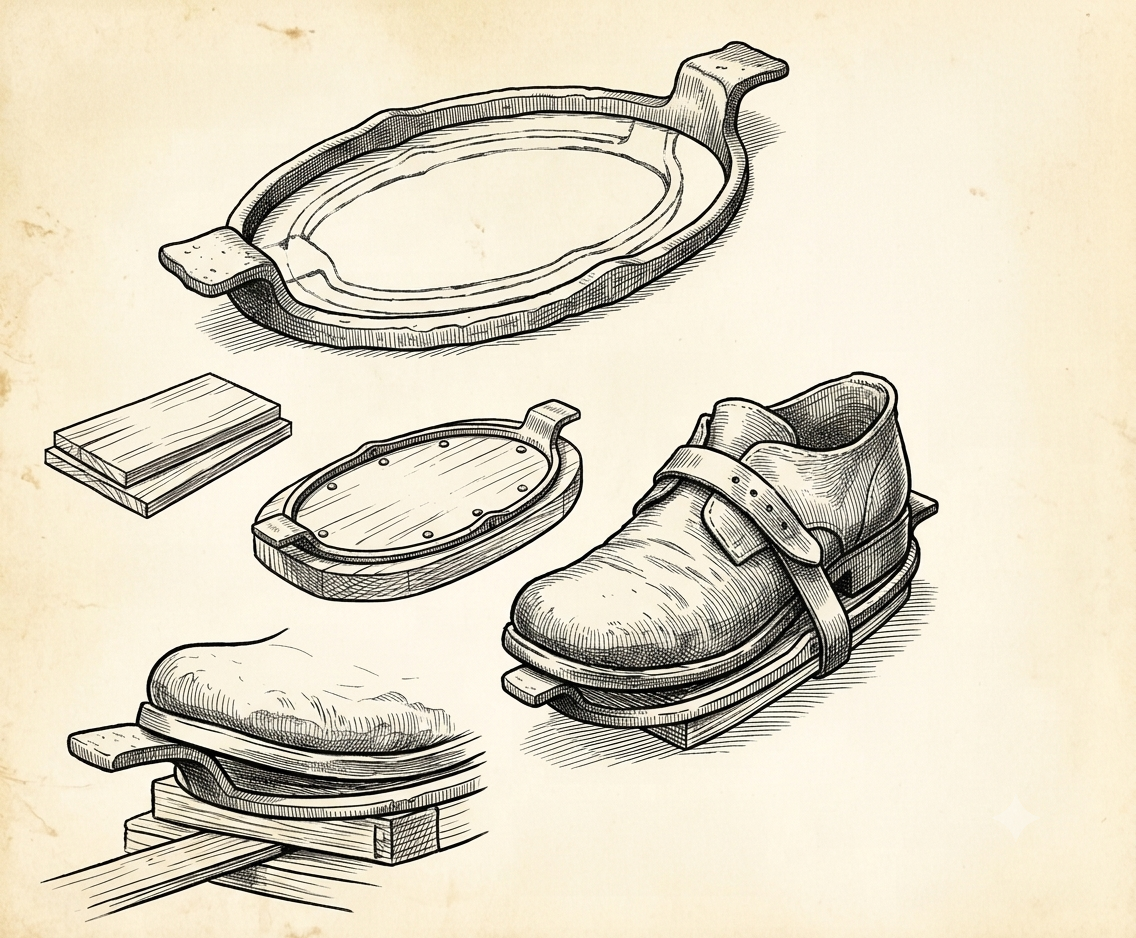
A patten was an overshoe consisting of an oval iron ring riveted to a wooden sole, which was then strapped beneath a person’s normal leather footwear. Functioning like personal mud-stilts, this unwieldy, noisy contraption raised the wearer’s shoes above dirty streets and flooded country tracks. They were famously clattery, so much so that many churches and homes with stone floors explicitly banned wearing them indoors—leaving visitors to unstrap them at the porch before stepping inside.
 This particular example is an incomplete post-medieval iron foot patten, dating from between c. 1720 and c. 1900. It features an oval ring, rectangular in cross-section, with raised platforms at both the heel and toe. The trapezoidal heel plate and circular toe plate each retain two rivet holes where iron fasteners once held the wooden sole in place. Though corroded, it is structurally complete; even a tapering iron fragment that broke off the front edge in antiquity was successfully recovered from the soil. Despite its wear, it remains a substantial piece of local history, measuring 164mm in length, 81mm in width, and weighing just under 120 grams combined.
Pattens with plain oval hoops superseded earlier crinkled 17th-century designs around c. 1720 (Bailey, 1995; Goodall, 1976).
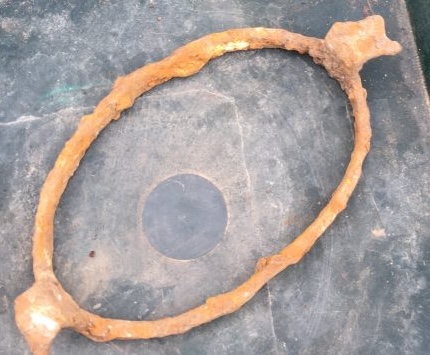
After uncovering my fourth or fifth patten from that single small patch of ground, it’s easy to picture how they ended up buried in the soil. Perhaps an annoyed rector, utterly vexed by the endless clatter of iron on church flagstones during the sermon, scooped up the discarded pile from the porch and tossed them over the boundary wall into the field out back. Or perhaps, more simply, after a damp morning service, the weather cleared up. I like to think of the congregation leaving St John’s smiling in the warm afternoon sunshine, stepping onto drying paths with their need for heavy, mud-defying iron shoes long forgotten—leaving their clanking pattens behind to be claimed by the earth centuries later.
You must be logged in to post a comment.