There is a specific kind of gratitude reserved for a neighbour who, amidst the chaos of a garden renovation, remembers the man with the metal detector. A garden near the heart of West Grimstead was being entirely returfed, and the owner kindly invited me to scan the exposed, overturned soil before the new lawn was laid. The day provided those perfect, overcast conditions—that “detecting grey” I so enjoy—where the quiet clarity of the landscape allows for total concentration. While much of the garden yielded the usual modern domestic scatter, a sharp, authoritative signal near the massive, twisted roots of an old oak tree demanded a careful dig.
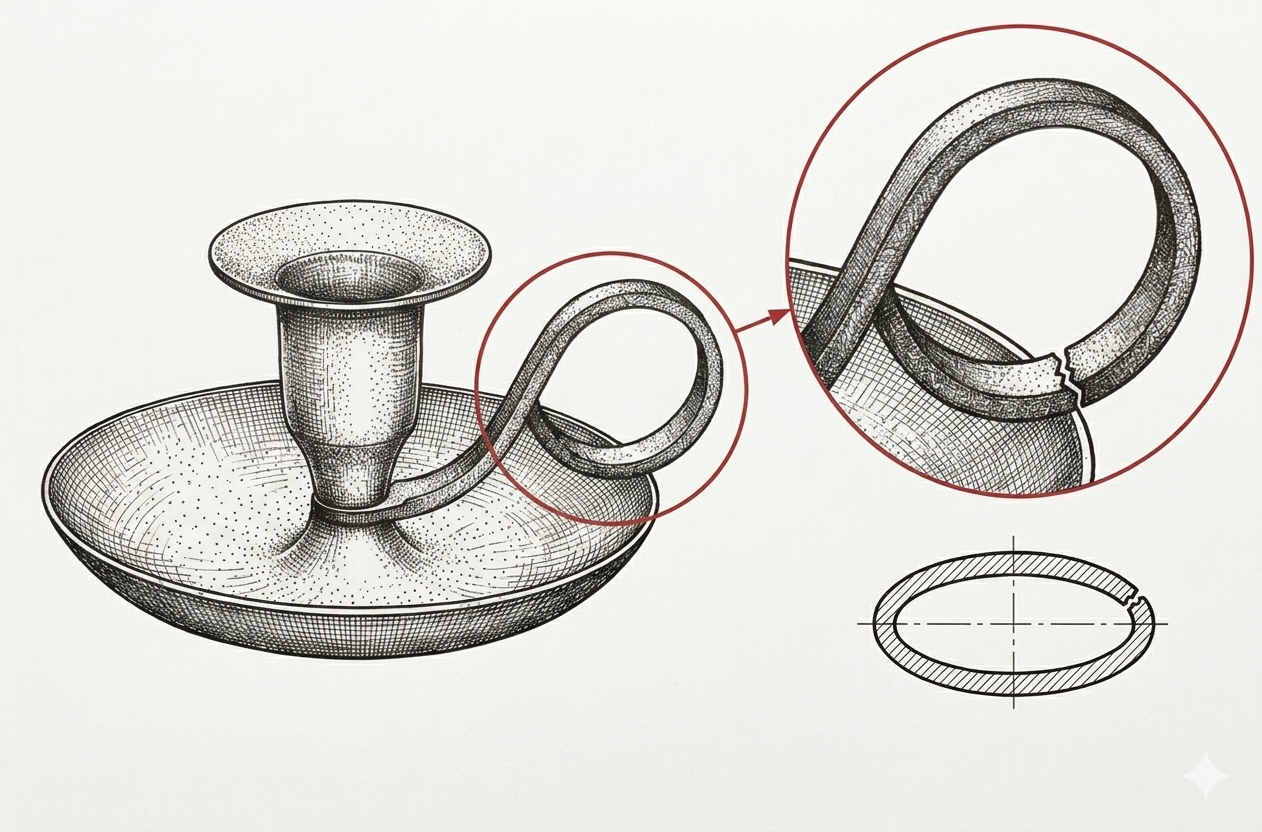
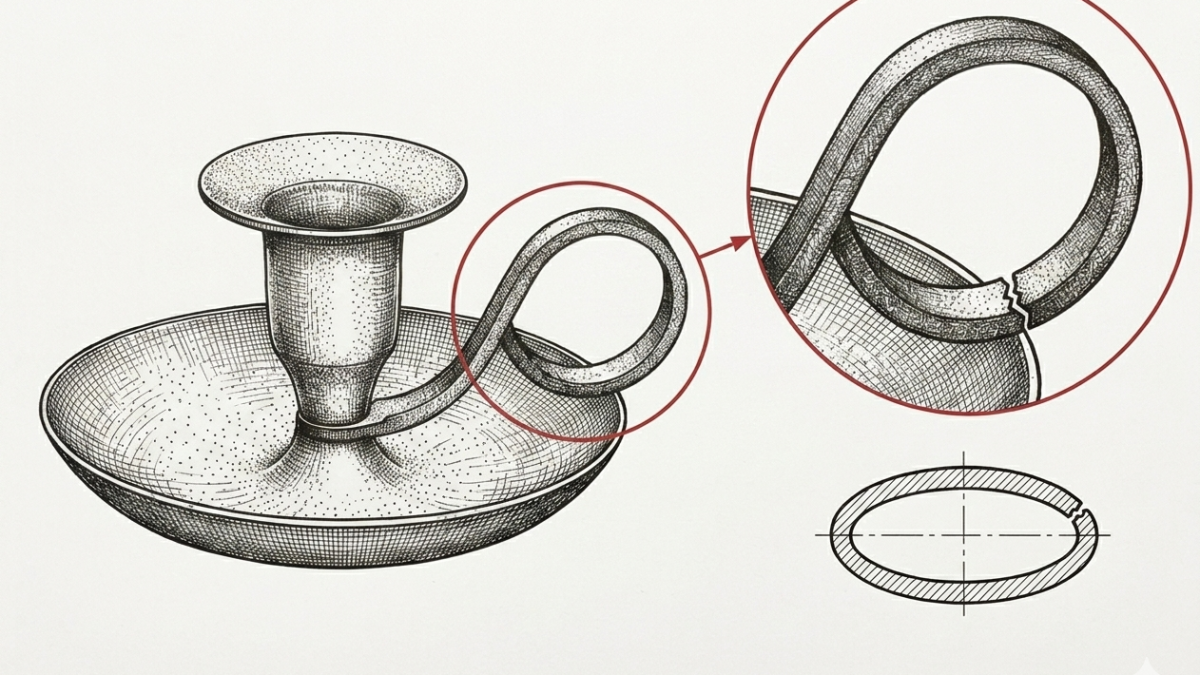
What I pulled from the dark earth brought an immediate jolt of adrenaline. It appeared to be a heavy, oversized man’s ring, cast in a dark, durable metal. However, it had a curious anatomical quirk: a secondary, jagged tail where the metal had snapped, giving it the appearance of a singular brass knuckle. My mind immediately began to race through the possibilities. Was it a specialized archer’s ring? A piece of primitive trench art? Even the landowner was stumped. It was the closest thing to a ring I had found at that time, and I spent the evening cleaning it with the kind of reverence usually reserved for a more ancient prize.
Determined to identify my “ring,” I shared a photograph on a well-known detecting forum. The “boffins” there wasted no time, and I felt that familiar, slightly hot prickle of detecting humility. What I had found was not a ring for a man, but the handle for a flame: the finger-loop from a Victorian chamber candlestick. Once I saw the illustration of a complete holder, the “ring” was instantly transformed. The secondary loop wasn’t for a finger; it was the curved arm that once swept down to join the wide, saucer-like base.
The location, however, is what truly breathes life into the fragment. The oak tree shades what had once been the village spring. Before the arrival of modern plumbing, this was a site of constant activity. I can only imagine a villager making the trip to the water’s edge in the fading light, perhaps during a dry spell or a cold winter evening. It seems likely that the original candlestick was unearthed years ago when the house and garden were first established on this site, and a stout whack on a rock, or perhaps the unforgiving blade of a heavy JCB, snapped the cast metal so cleanly. In that instant, the light literally went out. While the larger, broken pan was likely tossed to the verge by the contractors as debris, this small finger-loop slipped through the cracks, falling deep among the roots of the oak to wait for my coil. This humble artefact is a reminder that in this hobby, the eye often sees what the heart wants, but the truth—a broken tool from a cold Wiltshire morning—is often far more evocative, and a treasure to be sure.
Unique ID: [N/A – Non-Reportable]
Object Type: Fragment of a Cast Chamber Candlestick (Finger Loop)
Date: c. 19th Century
Material: Cast Iron / Base Metal
Provenance: Near the old village spring, West Grimstead






You must be logged in to post a comment.