
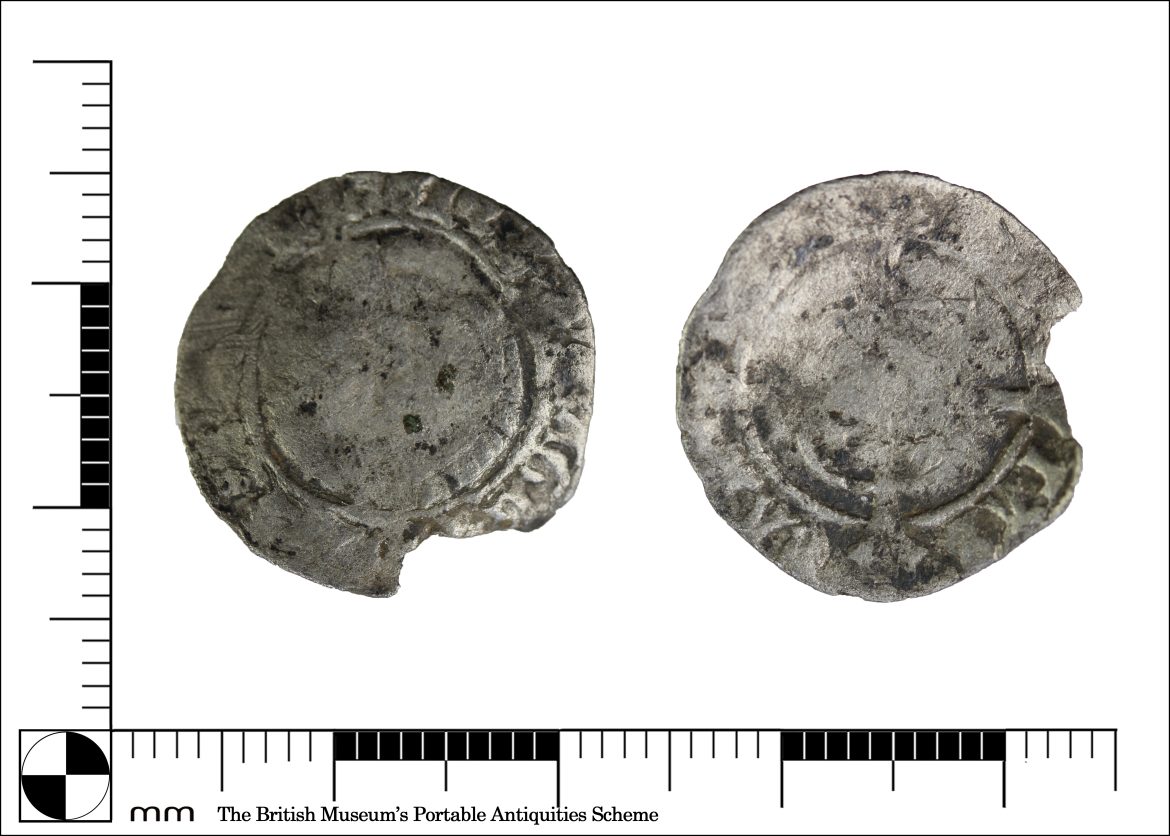
This discovery was as much about timing as it was about technique. I was detecting on a permission that includes a barnyard usually occupied by several dozen cattle. While I’m used to a curious audience, these particular residents are entirely too inquisitive; they have a habit of following me around when I’m in the same field and it only took a single wet nose in my ear for me to decide that wasn’t worth the risk. That and the constant fear that they would step on my precious detector when I was otherwise occupied with digging, which makes it nearly impossible to focus on a find.
There are seven other fields on this property, but the barnyard—the field closest to the farm’s heart—had remained a “no-go zone” for seasons. However, on this visit, luck was on my side. The landowner had decided to keep the cattle in the barn for the morning, leaving the yard silent and empty for the first time. I didn’t waste a second. I stepped into the gate and barely 30 paces in I caught that unmistakable, sharp “zeep!” of high-quality silver.
Analysis and Context: A World in Flux
The museum’s formal analysis identifies this as a small but significant artifact from one of the most transformative periods in English history.
- Period: Tudor, specifically the reign of Henry VIII (AD 1509–1547).
- Type: A silver penny, struck at the Canterbury Mint.
- Dimensions: It weighs a mere 0.81g with a diameter of 18.8mm.
- Condition: The coin is incomplete and extremely worn. The museum notes that its state reflects an exceptionally long and active life in circulation.
This coin is a direct link to the dramatic reign of a king who forever changed the course of the nation. Struck at Canterbury, it entered a world defined by the English Reformation and the dissolution of the monasteries. The extreme wear on the silver tells its own story. This wasn’t a coin that was hoarded or lost shortly after being minted; it was handled, traded, and passed through countless hands for decades. It likely stayed in pockets and purses long after Henry’s death, witnessing the religious and political upheaval as monasteries were closed and new doctrines were established. For a common subject of the Tudor era, this penny represented a day’s labor or a meal—a tangible part of the daily struggle during a time of monumental change.
Reflections: The Barnyard’s Secret
Finding this coin so quickly after the cattle were moved makes me wonder what else is resting in that specific patch of ground, shielded for many a season by its protective “guard” of curious cows.
To the original owner in the 16th century, losing this penny might have been a minor tragedy—a bit of silver dropped in the mud near the barn. To me, it is a “keeper” that bridges the gap between the quiet rural life of a Wiltshire village and the grand, turbulent history of the Tudor court. It is a reminder that history doesn’t just happen in palaces; it circulates in the dirt of a barnyard, waiting for the right moment to be found.
I’ll certainly be keeping my eyes on the barn doors for the next time those cows are tucked away.