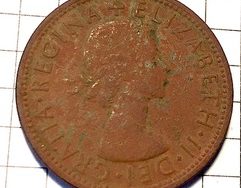
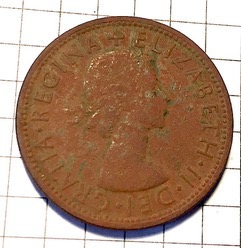
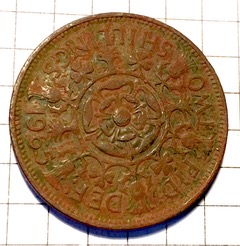
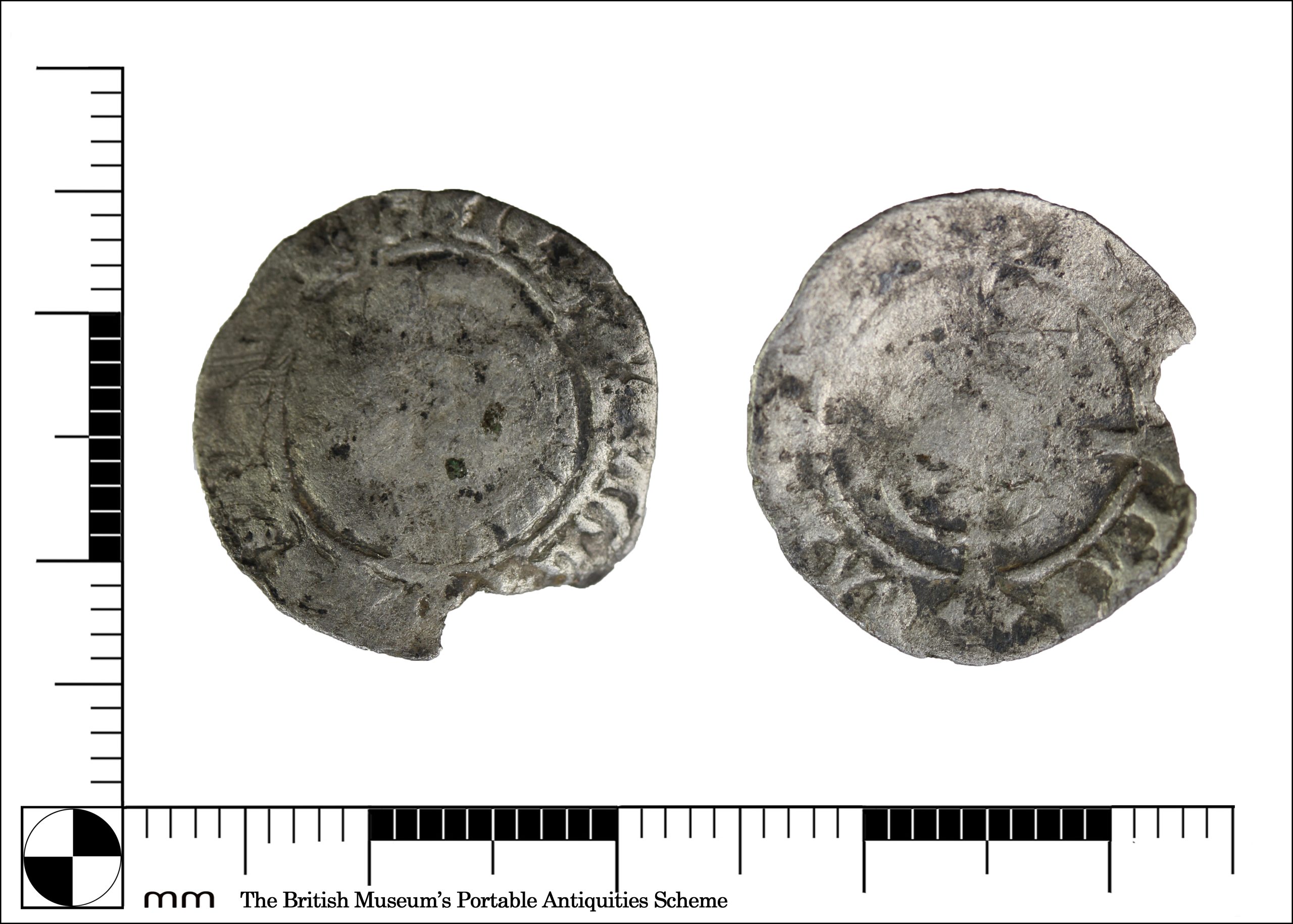
There is a specific weight to a florin that sets it apart from other coinage. Finding a British two-shilling coin—the florin—always feels like a significant discovery, partly because of its size and partly because of its long, steadfast history in British pockets. This particular example, a 1965 Elizabeth II florin, was won from the Wiltshire mud through a bit of stubbornness and a change of footwear.
I found this coin while trying to negotiate an old wooden gateway into my West Grimstead permission without stepping into ankle-deep mud. In the middle of that delicate balancing act, I leaned my detector against the wooden gate to steady myself, and the machine let out a sharp, unmistakable “Zeep!” about three feet shy of the gate and dry land.
At that moment, I was wearing old trainers that were already losing the battle against the muck. I had to hobble back to my car, swap them for a pair of calf-height wellies, and trudge back to the spot. Now more confident in my footing, I quickly relocated the signal. Common sense told me it would be a piece of gate hardware—a bolt or a hinge fragment—or at best a discarded pull-tab. Still, I couldn’t walk away from it after going to all the trouble of changing my shoes, especially since the hunt hadn’t been going particularly well that day.
What emerged from the sludge was not scrap, but a 1965 florin. Issued from 1849 until 1967, the florin was originally introduced as a step toward decimalisation, worth exactly one-tenth of a pound. By 1965, these coins were made of cupro-nickel (75% copper, 25% nickel), as the silver content had been removed from British coinage in 1947 to help pay off war debts [1].
I have to admit, I’m slightly disappointed that it doesn’t actually say “Florin” on it, and a bit more disappointed that it’s not one of the silver ones, but a Florin’s a Florin!
The obverse features the laureate head of Queen Elizabeth II by Mary Gillick, inscribed ELIZABETH II DEI GRATIA REGINA. The reverse is a mid-century masterpiece of heraldry, showing a crown at the centre of a ring of four heraldic plants: the Tudor rose, the thistle, the shamrock, and the leek, representing the four nations of the United Kingdom.
In 1968, as Britain prepared for decimalisation, the florin was superseded by the ten pence piece. Because they shared the same value, size, and weight, they co-existed in British change for decades. This 1965 survivor likely circulated alongside the new decimal coins for another quarter of a century. It wasn’t until 1993, when the 10p was reduced in size, that these old florins finally lost their status as legal tender.
Holding this coin, I’m struck by how much history it bridged. It fell into the soil at a literal and metaphorical gateway—lost at the edge of a field and at the edge of Britain’s pre-decimal history. I can only imagine the person who lost it; they likely weren’t as successful as I was in skirting the mud and probably fell right in. They would have been far more concerned with being covered in muck than grubbing around in deep sludge for a dropped coin. It’s a reminder that sometimes the signals we almost ignore, especially when we’re cold and muddy, turn out to be the ones worth the extra effort.
Sources: [1] The Royal Mint, “History of the Florin,” royalmint.com.