WILT-05A605_69aaf5a958922

Find 30: The Master’s Silence

The air in the Dun Valley today was crisp, carrying that specific, heavy scent of turned earth and early blossoms that only a Wiltshire spring can provide. A pale, watery sun struggled to burn through a ceiling of grey cloud, casting a soft, shadowless light over the pasture. To me it was the perfect weather for detecting. Without the glare of a too bright summer day or the biting cold of a spring frost, there is a quiet clarity to the landscape that allows for total concentration. It was an added treat to a morning of quiet persistence, where the only sound random low-frequency hum of the detector and the occasional, mocking caw of a crow overhead. The peace was suddenly broken by a jarring, authoritative signal in my headphones—the kind of loud, brassy shout that suggests something either very large or very near the surface. As it turned out, it was both.
 

Unique ID: WILT-05A605
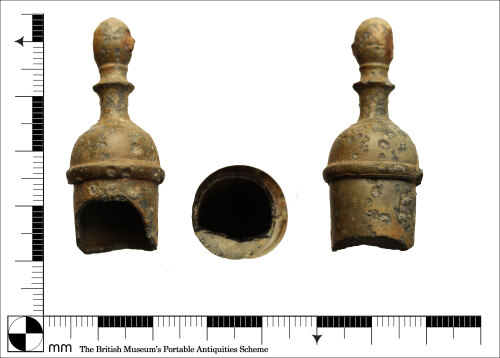
Object Type: Post-Medieval Cast Whistle
Date: c. AD 1750–1900
Dimensions: 43.0mm length; 18.0mm diameter; 12.89g weight
Key Feature: Decorative baluster finial handle

What emerged from just beneath the thatch of the meadow was an incomplete cast copper alloy whistle, dating from the mid-eighteenth to the late nineteenth century. Though it has lost its mouthpiece, the remaining fragment reveals a high degree of craftsmanship. Rather than a simple, utilitarian loop for a string, the apex features an elegantly turned baluster finial. This decorative handle suggests the whistle was a piece of some prestige, perhaps once fitted into a larger handle of bone or fine wood. You can still see the traces of the original casting seams running down its cylindrical body, leading to a perfectly circular sound hole. It is a sturdy, well-engineered object, designed to produce a note sharp enough to carry across these very fields, regardless of the wind or the clamour of a hunt.

There is a particular melancholy in finding a whistle that can no longer sound. It is a truncated instrument, a silent signal that has outlived both its purpose and its person. We know that hunting parties have roamed these hills for centuries, and the quality of this piece strongly suggests it was the tool of a Master of Hounds. As I stood in the quiet of the field, turning the broken whistle in my hand, I could picture the scene: a crisp morning much like this one, the horses stamping in the mud, the master of the hounds reaching for his instrument to command a pack of baying hounds. A short burst on the whistle and they’re off! Perhaps, during the excitement of the chase, the whistle fell and was trodden by an anxious rider. In an instant of high-speed drama, the broken instrument became a useless fragment, left behind and forgotten as the hunt thundered across ‘the Grimmers.’
WILT-06C956_69aafed6f1990

Find 29: Found Ring, Found Wanting

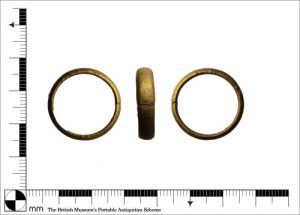
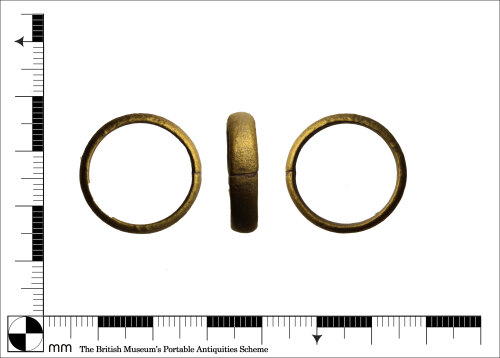
Unique ID: WILT-06C956
Date: c. AD 1800–1900
Object: Copper-alloy Finger Ring, UK Size P (or a US Size 7.5 to 8).
Construction: D-shaped section with a visible cut-and-rejoin seam.
Dimensions: 22.7mm (Outer Diameter); 4.07g (Weight).
Date Range: c. 1800–1900.

Every detectorist knows the “Ring Siren,” but sometimes the siren sings a bit of a sour note. I found this piece near the village pond, and my first instinct wasn’t “treasure”—it was “trash.” At a glance, it looked like a bit of a mower or some discarded mechanical scrap. Yet, there was a subtle curve to the band that caught my eye. Against the logic of the signal, I had a gut feeling it was something more. I knew immediately it wasn’t a precious metal, but maybe…? I saved it from the scrap bin, gave it a gentle cleaning, and decided to let the museum experts have a go at it.
What emerged was a copper-alloy finger ring from the 19th century. Once the “gold anticipation” faded, the questions began. Why make a ring out of base metals? Was it a simple gift for a child? A cheap prize won at a village fete? Or was it something more sinister—a “pig in a poke” sold by a traveling hawker to a local who thought they were getting a bargain?

The most fascinating part of this ring isn’t the metal, but the deliberate damage. It has been cut and rejoined, but don’t believe this was to change the size. Instead, it seems the cut was made with a specific, nefarious intent: to obscure the maker’s mark. By slicing and welding right through the stamp, the seller effectively destroyed the ring’s provenance. Once this band was been given a cheap gold wash, it would have passed as a high-value piece to the casual observer. But by “killing” the mark, the fraudster ensured that no one could determine that the hallmark was faked. I imagine faking the assay mark is a higher crime than trying to pass off a brass ring for a gold one. You can almost feel the owner’s anger as the gold wash wore off to reveal the copper beneath. Seeing the hallmark deliberately butchered by a jagged weld, they realised the scam and threw their ‘hard-earned’ mistake deep into the pond.

I feel a strange affinity for the poor soul who was cheated by this ring. I was cheated of a valuable find, but rewarded with a lesson in humility. History isn’t always gold and silver; sometimes it’s the brassy, badly repaired trinkets of the everyday person that tell the loudest stories. It may have been “found wanting” in carats, but as a window into the life of a West Grimstead local 150 years ago, it fits perfectly.

otterbutton2

Find 28: Double Gilt Double Buttons

Object: Two High-Status Livery Buttons
Material: Fire-Gilt (Gold-Plated) Brass
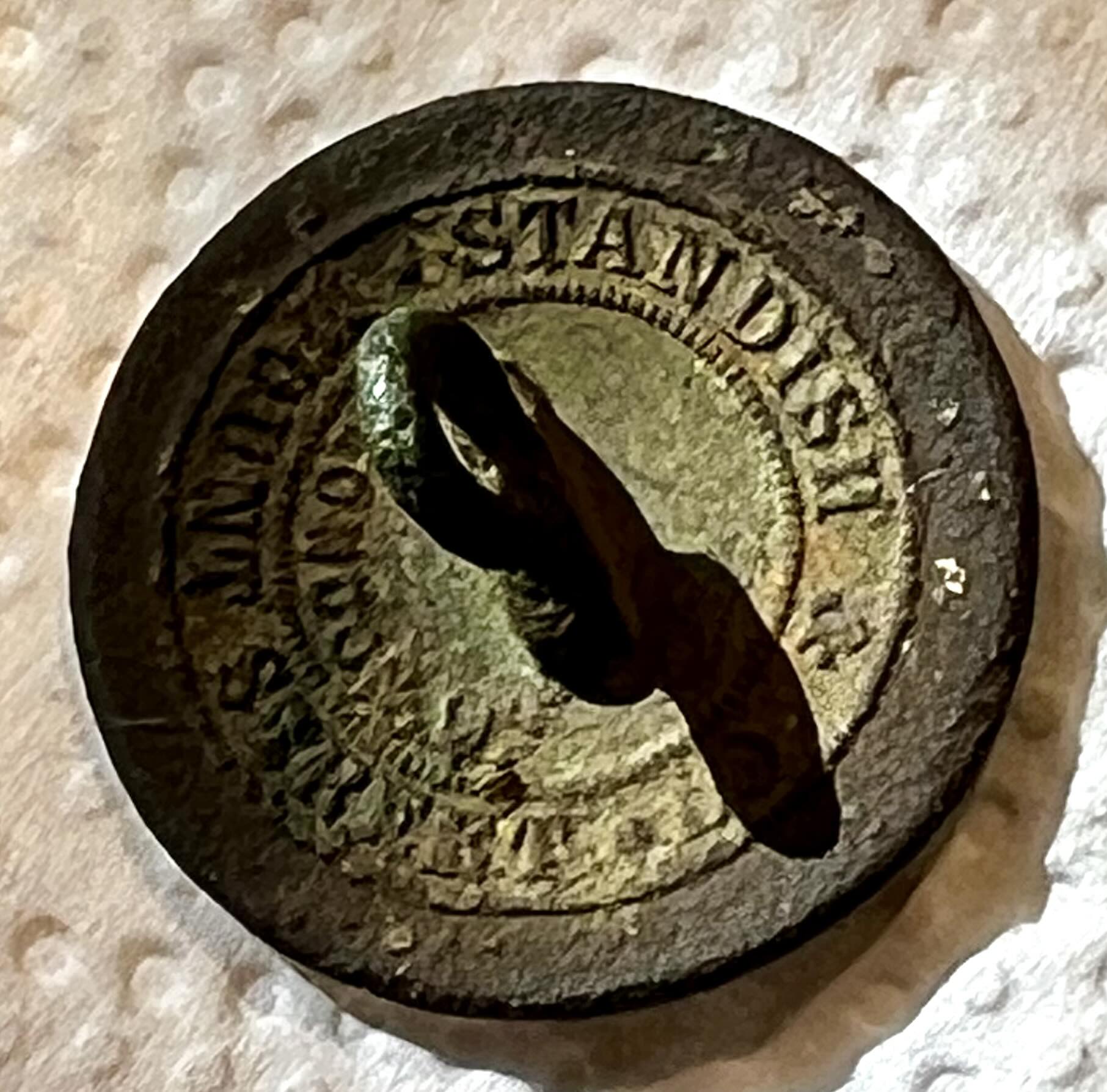
Manufacturer: Standish & Co., 48 Mount Street, London (Mayfair)
Date: Circa 1870–1890 (Late Victorian)
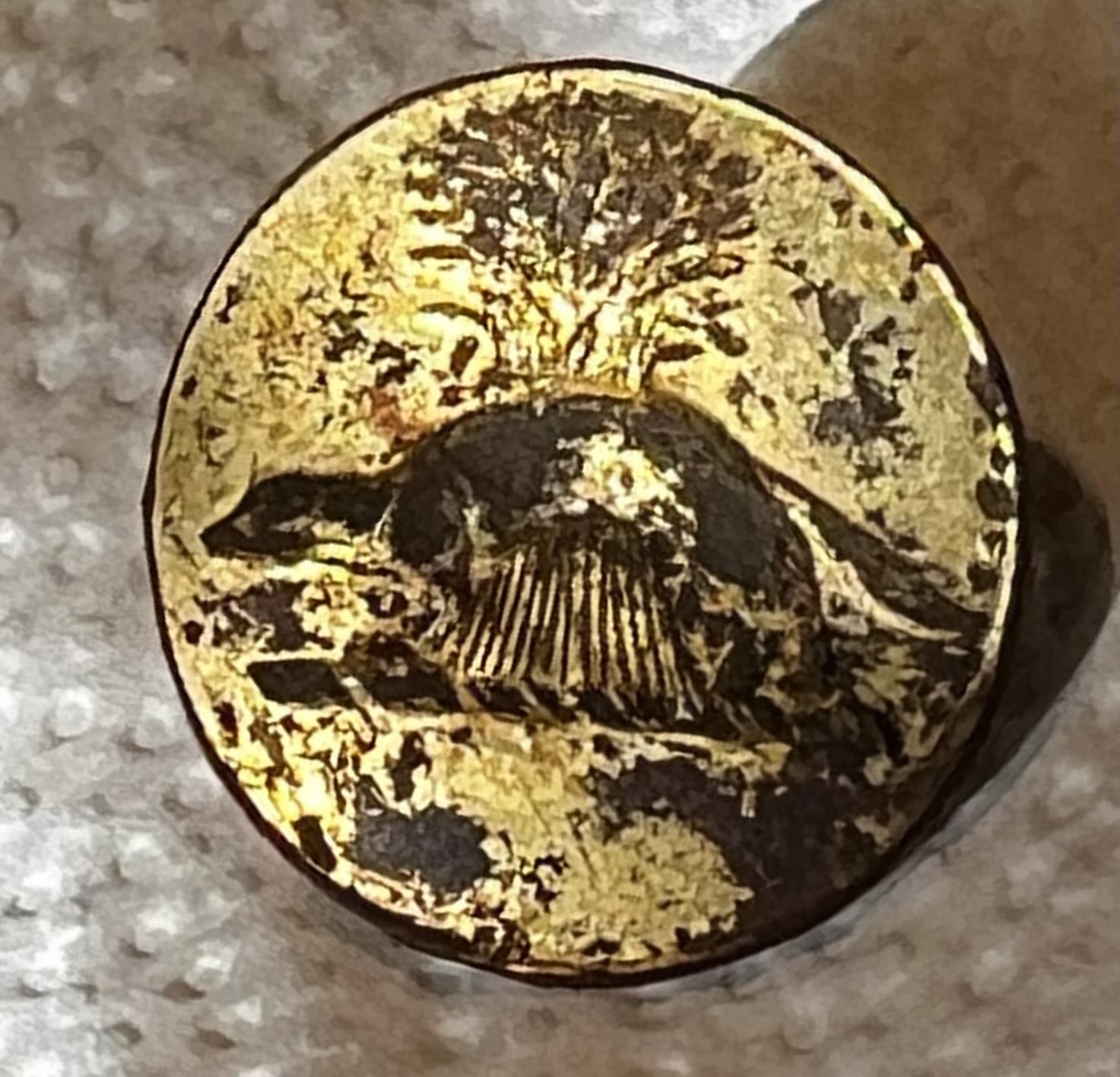
Iconography: An Otter Passant on a torse (braided cord) with a Garb (wheatsheaf) behind it.


At first I was surprised to find not one, but two gilded buttons in the same hole. Okay, to be honest, my first thought was “Woo Hoo! Gold!” Then I started wondering why and how they came to be there? All I knew about otters was that they had been hunted to near extinction, and I suspected these buttons were perhaps a hunting prize or similar.

However, their depiction of “An Otter Passant on a torse with a Garb (wheatsheaf) behind it” makes it more likely these are livery buttons from the Luttrell or possibly Coleridge families, who have similar designs in their family crest.

But finding two together seemed odd. It’s unlikely a livery coat was considered “shoddy” and buried in a field with two shiny buttons still intact. They were worth money! A bit more research suggested an even darker scenario for why they were together in the sandy soil near Windwhistle Lane.

The only reason to leave such valuable items attached was fear. Before germ theory was fully understood, the prevailing belief in “miasma” meant that fabrics were viewed as dangerous vessels for disease. Consequently, when a servant fell ill, a household’s standard response was the immediate disposal of their belongings. A porous, heavy wool livery coat would have been seen as a contaminated death trap—one that even the most destitute villager wouldn’t dare salvage. Instead, the garment was likely shoveled into a pit, buttons and all, and interred in the aerated sandy soil near Grimstead Road. Over the next century and a half, the wool vanished into the earth, leaving behind only two glints of gold and the crisp, haunting imagery of the otter and the wheatsheaf.

The backmark “Standish & Co, Mount Street” identifies the coat as a premium garment from a high-society London tailor. The presence of the Garb (wheatsheaf) is a specific heraldic difference often used by the Luttrell or Coleridge families , both of whom had ties to Wiltshire and London social circles.

In the 19th century, sand was often used for “sanitary burials” because it drained well and was thought to filter the “bad air” of a diseased object better than heavy clay. More than likely, I have found the final resting place of a livery coat belonging to a footman who fell ill while his masters were visiting the Longford/Grimstead area. It is a hauntingly beautiful find that turns a piece of metal into a story of a specific person, a specific tailor, and a specific moment in West Grimstead’s past. One day I must return to see if other items, such as belt buckles or more buttons, await rediscovery after their century and a half’s slumber.

WILT36ABE3

Find 27: Purloined Purse Bar

Item: Post Medieval copper-alloy purse-bar
Unique ID: WILT-36ABE3
Date: c. AD 1450–1550
Composition: Cast copper alloy.
Measurements: 55.2mm (L) x 47.4mm (W); Weight: 35.48g.

There is a specific kind of heartbreak in finding a purse-bar. When the detector signals a heavy, high-conductive thrum, the heart instinctively hopes for a cache of silver; instead, the soil yields the elegant copper-alloy frame that once guarded it. This incomplete bar, dating to the cusp of the Medieval and Post-Medieval worlds, is the “Type B1” skeleton of a lost Tudor fortune.

What strikes me most about this discovery is its location. I pulled this bar from the earth less than 20 meters from where I previously found the Victorian Hunter’s watch. In the world of metal detecting, 20 meters is a stone’s throw, yet the two objects are separated by a four hundred years span of time.

I am honestly amazed that the same small corner of West Grimstead produced both finds. Together, they speak of the shifting tides of our village’s economic status. I found myself imagining a merchant or landowner in the late 15th century, riding home from the Norman church in West Grimstead toward Whaddon or down Emmots footpath. Even today, there are shady spots out of sight of anyone—likely places to be waylaid by thieves.

It is hard to imagine someone simply dropping their purse; it was an essential piece of daily life, secured tightly to the belt. Instead, it was likely taken by force. Indeed, this find brings to mind the birth of the term “cut-purse.” Before the advent of internal pockets, a thief’s quickest path to wealth was to slash the leather thongs or the fabric pouch from the metal bar, leaving the frame to fall into the mud while they vanished with the gold.

While the leather pouch has long since rotted away, the metal frame remains—a sturdy, double-collared reminder that while wealth is fleeting, the containers we build to hold it are surprisingly resilient.  It’s easy to assume a small patch of land has nothing left to give, but this find proves the soil doesn’t care about the centuries between a Tudor robbery and a Victorian watch—it holds them both in the same timely embrace until a random wanderer like myself brings them back to light.

WILT-06A431_69ab00fc192df

Find 26: The Clasp Maketh the Garb

Unique ID: WILT-06A431

Date: c. AD 1500–1650 (Early Post-Medieval)

Size: 37.8mm long and weighing 5.21g.

Material: Cast copper alloy.

When this first came out of the soil, my mind went straight to military hardware. Given the size and the attachment loops, I originally thought it was a sword belt strap fitting, very similar to a previous find of mine (WILT-336B57).

In an age before zippers and mass-produced buttons, how you held your clothes together said a lot about who you were. This cast copper-alloy clasp is the “eye” half of a hook-and-eye set. While the hook portion is missing, the surviving piece is a beautiful example of early post-medieval craftsmanship.

Diagram showing how the fastener may have been used. (AI generated image)

The oval panel features delicate foliate and floriate decoration; a moulded relief with three round knops (studs) and a collared end. It’s a reminder that even functional items were rarely plain; someone took the time to make this fastener look as good as the garment it held. It just goes to show that “heritage” isn’t just about coins and crowns; it’s about the everyday items—from sword belts to lady’s gowns—that people used hundreds of years ago. To hold a clasp that likely fell off a garment in the 1500s connects you directly to the person who lost it.


Find 25: The Emerald in the Earth
Find 24: The City in the Country
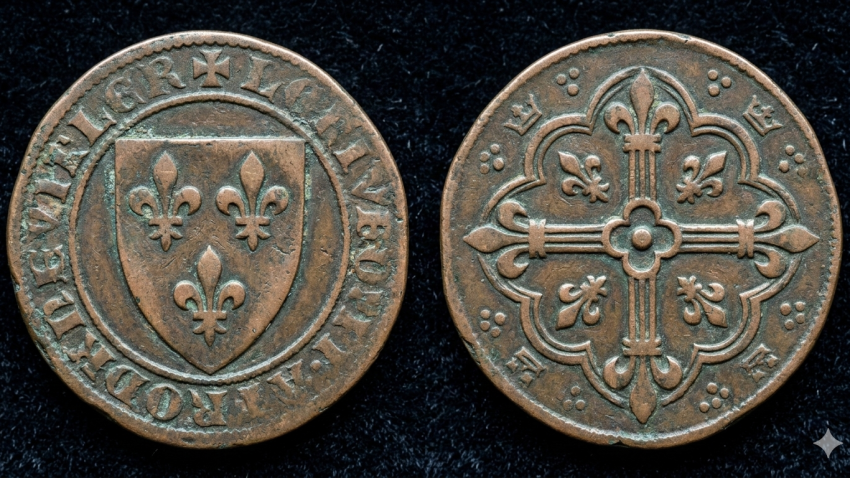
Find 23: Just a Jetton?