
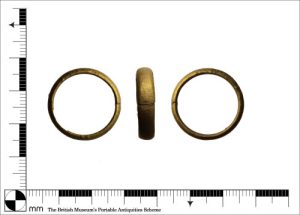
Unique ID: WILT-06C956
Date: c. AD 1800–1900
Object: Copper-alloy Finger Ring, UK Size P (or a US Size 7.5 to 8).
Construction: D-shaped section with a visible cut-and-rejoin seam.
Dimensions: 22.7mm (Outer Diameter); 4.07g (Weight).
Date Range: c. 1800–1900.
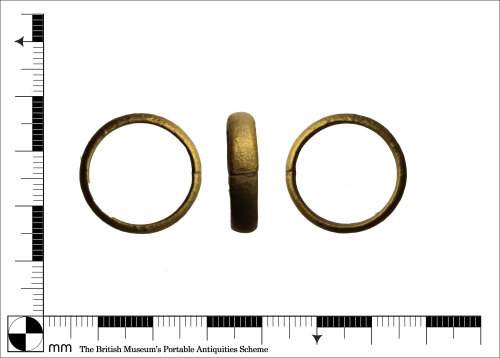 Every detectorist knows the “Ring Siren,” but sometimes the siren sings a bit of a sour note. I found this piece near the village pond, and my first instinct wasn’t “treasure”—it was “trash.” At a glance, it looked like a bit of a mower or some discarded mechanical scrap. Yet, there was a subtle curve to the band that caught my eye. Against the logic of the signal, I had a gut feeling it was something more. I knew immediately it wasn’t a precious metal, but maybe…? I saved it from the scrap bin, gave it a gentle cleaning, and decided to let the museum experts have a go at it.
What emerged was a copper-alloy finger ring from the 19th century. Once the “gold anticipation” faded, the questions began. Why make a ring out of base metals? Was it a simple gift for a child? A cheap prize won at a village fete? Or was it something more sinister—a “pig in a poke” sold by a traveling hawker to a local who thought they were getting a bargain?
The most fascinating part of this ring isn’t the metal, but the deliberate damage. It has been cut and rejoined, but don’t believe this was to change the size. Instead, it seems the cut was made with a specific, nefarious intent: to obscure the maker’s mark. By slicing and welding right through the stamp, the seller effectively destroyed the ring’s provenance. Once this band was been given a cheap gold wash, it would have passed as a high-value piece to the casual observer. But by “killing” the mark, the fraudster ensured that no one could determine that the hallmark was faked. I imagine faking the assay mark is a higher crime than trying to pass off a brass ring for a gold one. You can almost feel the owner’s anger as the gold wash wore off to reveal the copper beneath. Seeing the hallmark deliberately butchered by a jagged weld, they realised the scam and threw their ‘hard-earned’ mistake deep into the pond.
I feel a strange affinity for the poor soul who was cheated by this ring. I was cheated of a valuable find, but rewarded with a lesson in humility. History isn’t always gold and silver; sometimes it’s the brassy, badly repaired trinkets of the everyday person that tell the loudest stories. It may have been “found wanting” in carats, but as a window into the life of a West Grimstead local 150 years ago, it fits perfectly.
You must be logged in to post a comment.