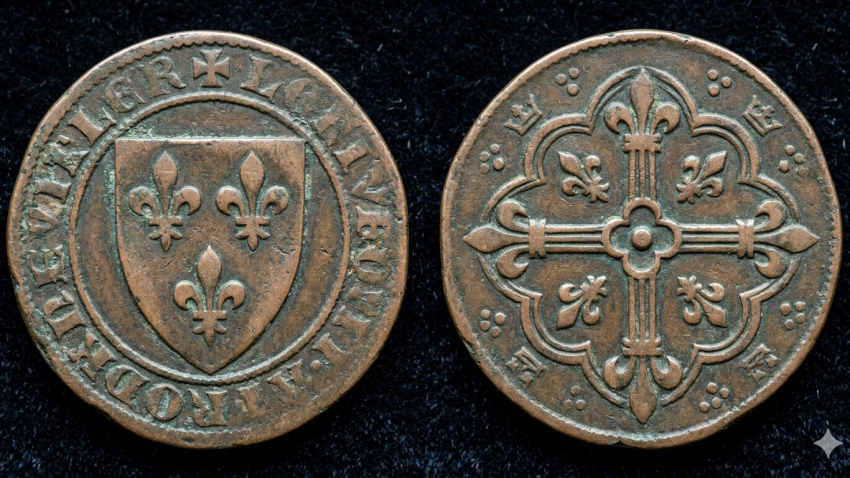
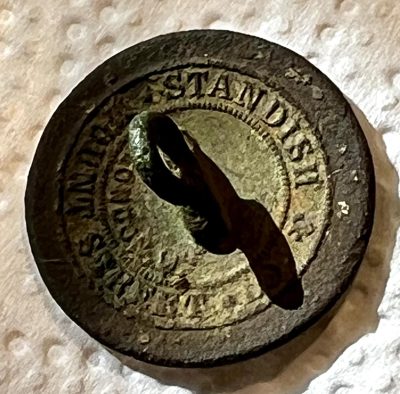
My Jetton is too toasted to show any detail so I used an AI Generated image.
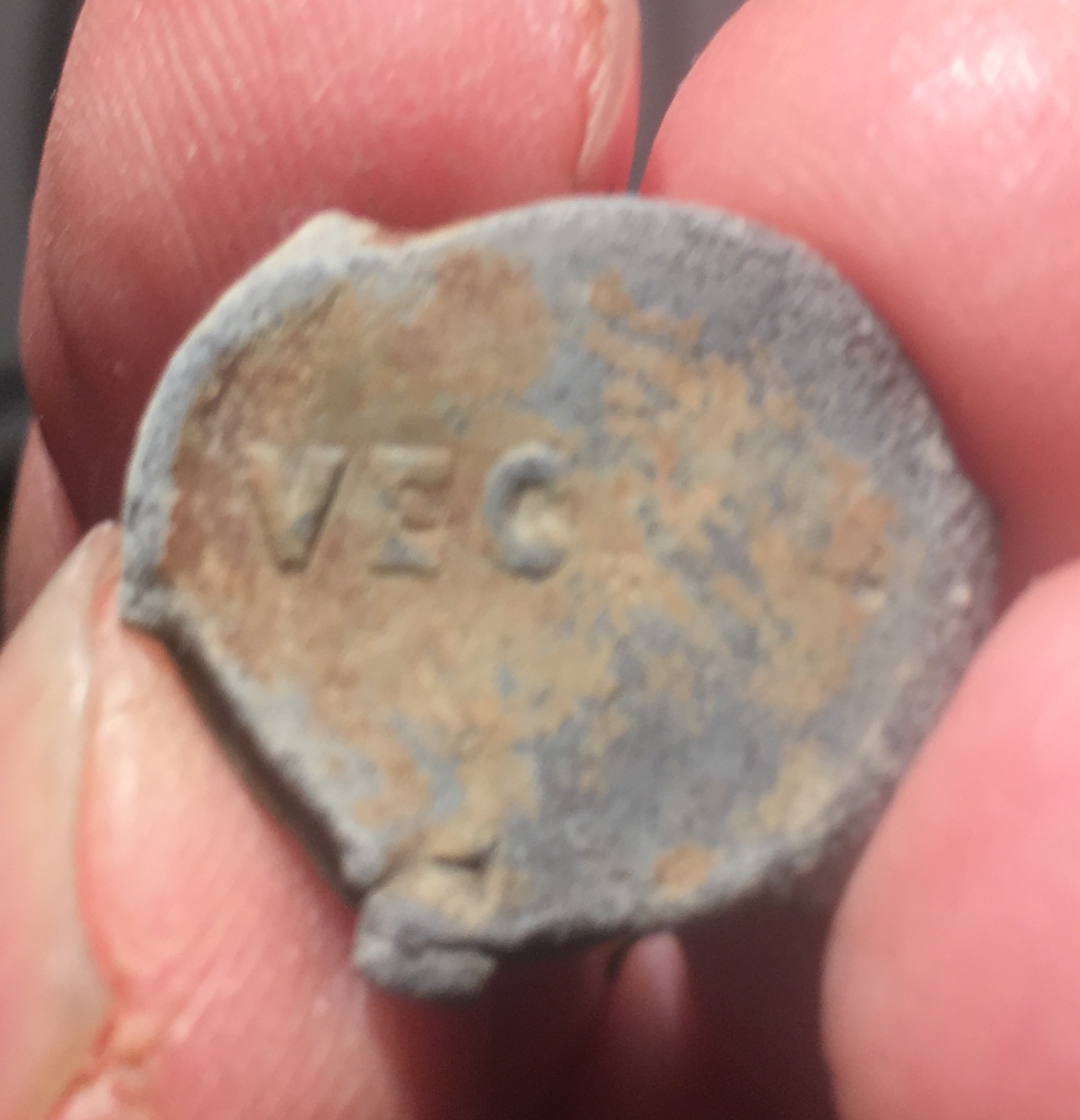
While I would never venture onto the actual grounds of a nearby ruined abbey, I do have permission just opposite. This field runs parallel to the old abbey and connects that land to the old track that led toward Clarendon Palace. As I moved along this corridor, I picked up a bright, thin zeep!—the distinctive signature I’ve come to associate with copper alloy. Given the proximity to the palace route, one expects the remnants of travel, but this target sat shallow and steady. I know I am lucky to be able to explore such a storied landscape, but I was also expecting that this target would prove to be scrap that gave no clue to its origin or purpose. However emerging from the turf was a thin, circular disc, badly worn but still carrying the intricate, crowded iconography of the Nuremberg masters.
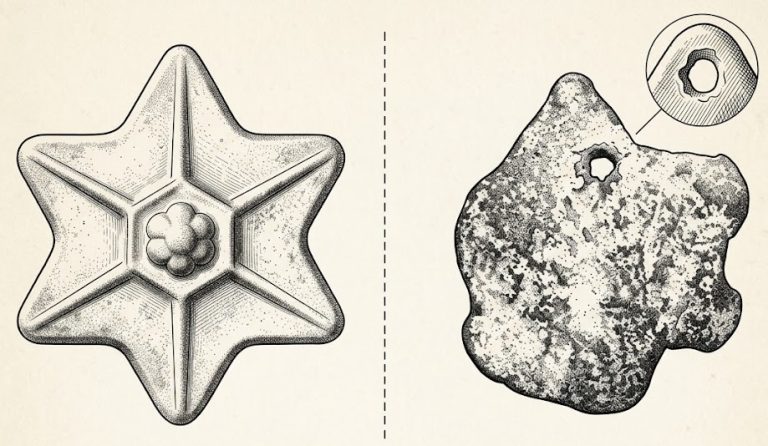
Formally recorded as WILT-EBDBCC, this is a complete copper alloy jetton from the 1589 series produced by Hans Krauwinckel. The museum reviewer obviously had a lot of experience with these tokens, as he provides so much more detail than I can see on the one I hold in my hand. He identifies the obverse as Fortuna Variabilis—Variable Fortune—seated upon her wheel, holding the Scythe of Time and a leash that secures the chains binding a kneeling, goat-legged figure of Time. The reverse is described as Fama (Fame) standing between the sun and a crescent moon, blowing two trumpets toward the stars.
The recovery of several similar tokens across these adjacent fields suggests they were part of the daily life of the area. While a steward might have used them for accounting, it is also likely that gambling was a persistent habit among those moving along the palace track. One can easily envisage the retainers, grooms, and camp followers waiting in these fields, passing the hours by wagering on the day’s sport. To bet on the King’s own success might have been folly, but betting on the prowess of his guests—or the speed of the hounds—offered a way to pass the time during royal transit. These jettons were essentially the “poker chips” of the Elizabethan roadside.
There is a stark, physical irony in the wear on this piece. The “Variable Fortune” it depicts has been smoothed away by centuries of soil chemistry and the friction of the old trackway. It is a fragile survivor of the Elizabethan era, a silent witness to a time when the abbey was a dissolving shadow and the road to the palace was a stage for both royal power and common risk. To find a cluster of them is to uncover the “tokens” of the 1500s—or perhaps the discarded stakes of a game that didn’t go the traveler’s way.
Conclusion: The Corridor of Calculation
The long field bordering the abbey is more than just a productive piece of Wiltshire farmland; it is a transitional landscape. In one direction you have the ruins of a Augustinian Abbey, once a centre of spiritual and economic gravity; and in the other, the trackway leads toward the skeleton of Clarendon Palace. What little archaeology of this field I can uncover with my detector suggests this strip of land and its neighbours functioned as a “waiting room” for the great and the small alike. In this field, the spiritual silence of the abbey met the loud, risky business of the palace road, and these small copper alloy discs are all that remain of the conversations—and the bets—that took place in between.






You must be logged in to post a comment.