
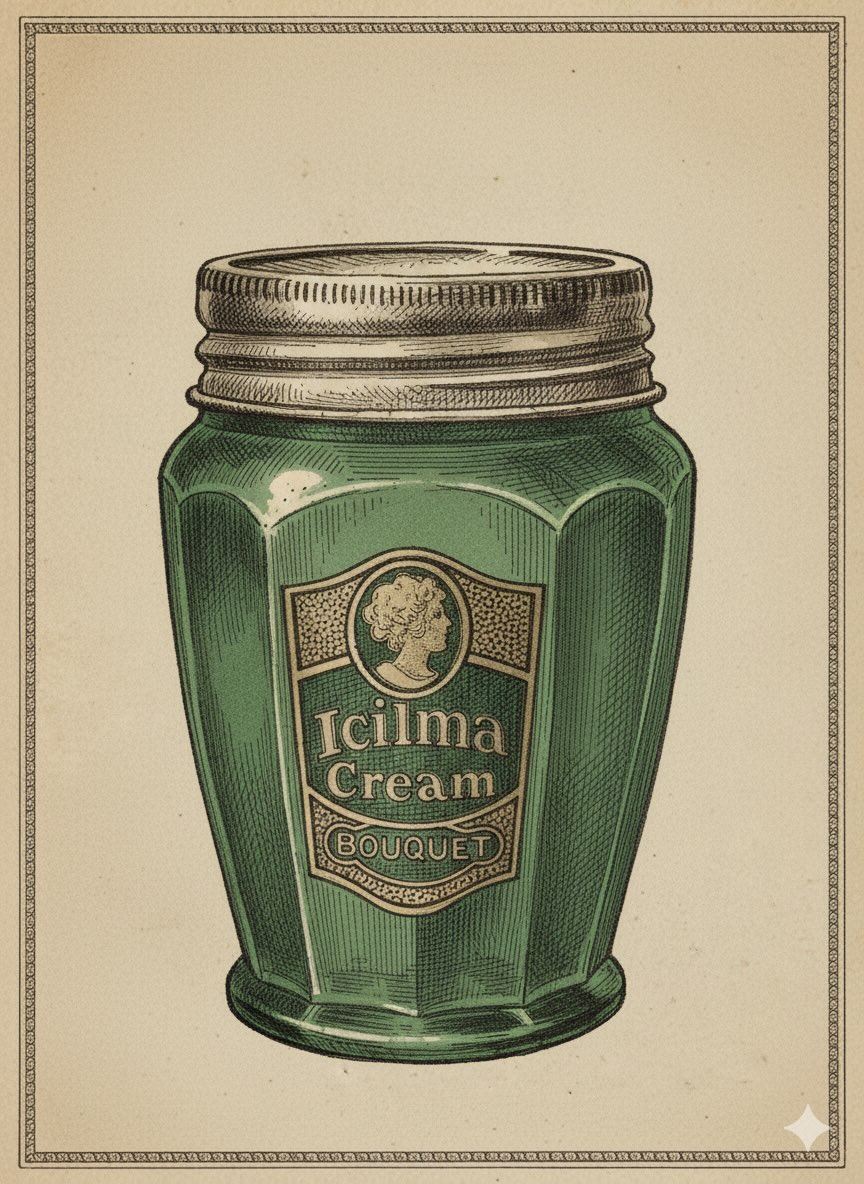
 Object: Icilma Vanishing Cream Jar
Date: c. 1921–1953
You may wonder why a glass bottle has claimed a page in a metal detecting journal, but this little treasure earned its place through a stubborn, metallic song. I found it in that strange “no-man’s-land” between an old farmhouse and the public footpath—a place of random discards and forgotten journeys.
The signal was deceptive: a strong core wrapped in scratchy, restless undertones. It was the kind of ragged response I might usually dismiss as a fragment of crushed foil or a rusted tin, but something convinced to me to dig.
When the soil finally parted, it didn’t reveal the dull orange of rust, or bright aluminium gleam, but a sudden, vivid pulse of glint of colour. I found myself staring at a small, fluted jar of emerald green glass—an Icilma Vanishing Cream pot, miraculously untouched by the decades. I can only offer a grateful nod to the detecting gods for guiding my shovel a fraction to the side, sparing the fragile glass from a final, shattering blow.
“Natural Water from the Algerian Springs”
Icilma was a titan of early 20th-century artifice. They enchanted the public with tales of “natural oxygenated water” drawn from a singular spring in the Algerian desert. This “Vanishing Cream” was their flagship—a non-greasy alchemy designed to disappear into the skin, leaving only a perfect base for powder.
That signature green glass was designed to catch the light on a lady’s dressing table, a small monument to luxury in a changing world. To find it here, tossed aside in the grey shadows between the village centre and the farmhouse beyond feels like catching a glimpse of a ghost’s morning routine. Whether it was lost on a walk or discarded once the magic ran dry, my random wanderings have brought its emerald beauty back to the sun.
There is a poetic symmetry in this find. Much like the 16th-century jettons mass-produced in Nuremberg and scattered across the globe, this jar marks the dawn of a new empire: the global beauty industry. By the early 1920s, Icilma had been swept up into the growing Lever Brothers dynasty. The fluted, iconic glass was crafted to be recognizable by touch alone, even after the paper labels had disappeared into the Wiltshire loam. It is a mass-produced relic of vanity, holding its color long after the faces it graced faded into history.
You must be logged in to post a comment.