
The Constantine Nummus
ID: WILT-A316E1
It’s still a big thrill to unearth a piece of imperial history from the soil, even when time has worn its grand design down to a whisper. This complete copper alloy Roman coin dates to the House of Constantine (AD 307–361), a transformative era that saw the rise of Christianity and the founding of Constantinople.
Found just south of Salisbury (known to the Romans as Sorviodunum)—this struck coin weighs 7.28 g and measures 24.5 mm in diameter. It is classified as a nummus (plural: nummi), a Latin term meaning simply “coin.” Archaeologists use the word to describe the low-value, copper-alloy currency minted in vast quantities during the late Empire. In terms of daily purchasing power, its closest modern equivalent would be a low-denomination pocket change coin, like a 5p or 10p piece—the kind of humble money everyday citizens used to buy a loaf of bread or a cup of cheap wine.
Though categorised as extremely worn, it still carries the unmistakable silhouette of Roman authority. The obverse features a right-facing bust adorned with a laureate or pearl diadem, paired with a fragmented inscription reading […]NST[…]—a surviving echo of the Constantinian name. Unfortunately, centuries in the earth have rendered the reverse description and mint mark completely illegible.
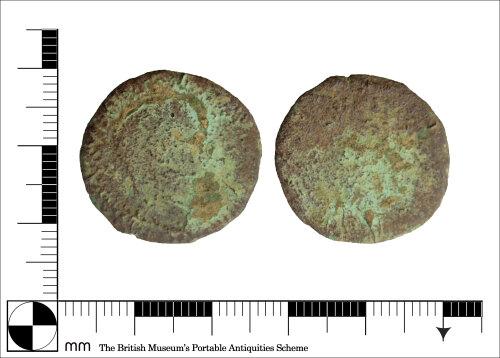
This coin serves as a profound reminder that we do not need mint-condition showstoppers to connect with history. Even the dullest, most worn coin can still shed a bit of light onto our growing knowledge of other times and other empires. This humble piece of copper is a vital data point, mapping ancient commerce and proving that even a heavily circulated, obscured fragment can cast a knowing light on Britain’s deep Roman past.
You must be logged in to post a comment.