
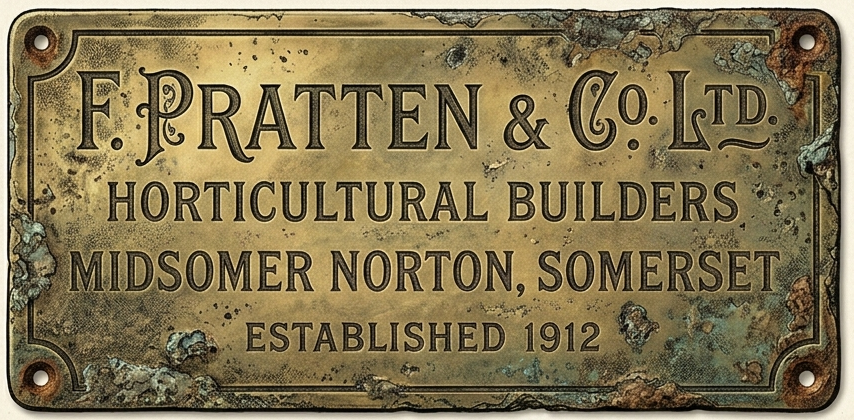
This discovery began as a lesson in looking twice. While detecting in a garden on the edge of the village, my machine let out a somewhat scratchy, broken signal—the typical, unglamorous signature of a piece of modern agricultural iron or scrap tin. It was quite loud and near the surface so I knelt down to flip it out of the turf with a dig tool and what came up was a heavily corroded, rectangle of metal masked in a thick crust of Wiltshire clay and rust. By all rights, it should have gone straight into the scrap-iron bucket destined for the recycling heap yet, as I wiped away the dark grit, my thumb caught the faint, raised contour of lettering. Intrigued, I brought it home to clean it up with a soft brush, slowly revealing a name that tells a fascinating story of British twentieth-century social history: F. Pratten & Co. Ltd. F. Pratten & Co. Ltd. (commonly known as Prattens) was a powerhouse of British prefabricated construction, based out of Midsomer Norton in Somerset. Established by Frank Pratten in 1912 and incorporated in the mid-1920s the firm carved out a monumental reputation as “Horticultural Builders,” becoming a household name for their durable, timber-framed utility buildings. Between the late 1920s and the 1970s—the era from which this small tin tag confidently dates—the company’s catalog of structures touched nearly every corner of rural and civic British life. They manufactured everything from commercial greenhouses and agricultural workshops to poultry “hen huts” for working farms. Most famously, they supplied the iconic timber-framed “Pratten Huts” for the post-war HORSA programme, providing utilitarian, portable classrooms to accommodate the baby-boom generation after the Second World War.
Finding this tag on the edge of a working farm near Farley immediately fired the imagination. I made a mental note to ask the landowner on my next visit if they once had an old ‘Pratten building’ standing on the property. This small, humble plate likely once adorned a sturdy cedar greenhouse, a busy poultry barn, or perhaps even a temporary agricultural workshop that has long since been demolished or scrapped. It shares a wonderful, nostalgic kinship with The Pewter School Bell, which I found not so far away.
I know it may seem strange to some to get so much excitement from a rusty, unremarkable bit of tin that lacks the romance (and lustre) of high antiquity. It has no silver or gold and it is a far cry from the Roman or medieval relics we occasionally coax from the downs. Yet, much like the prefabricated structures it once proudly marked, this little plaque taught me a piece of local industrial heritage I did not know before, offering a brief, tangible window into the practical, working lives of mid-century Wiltshire. That to me, is the real heart of this hobby; it reminds me that every find does indeed tell a story, and the most ordinary objects are often the ones that ground us most deeply in the lived reality of our landscape.
You must be logged in to post a comment.